


What Chennai Eats: A Journalistic Deep Dive into the Capital’s Culinary Soul
Chennai, the bustling capital of Tamil Nadu and home to over 11 million residents, eats with a rhythm dictated by tradition, tide, and traffic. Its plates overflow with rice-based staples, lentil-laden curries, and fiery meats, all anchored by coconut’s cooling touch. Unlike Mumbai’s chaat chaos or Delhi’s kebab queues, Chennai’s food scene is a disciplined symphony: breakfast idlis at 6 a.m., biryani feasts at 2 p.m., and street-side jil jil jalebis under neon lights. This article, built on verifiable sources from travel guides, local reports, and cultural wikis, dissects what the city consumes daily, seasonally, and celebratorily. While hard statistics on consumption volumes remain scarce in public domain reports, the patterns are clear from on-ground documentation: rice and lentils dominate, street food thrives despite health debates, and global influences nibble at the edges without displacing the core. Chennai’s food is not merely sustenance; it is a cultural archive, a social glue, and an economic engine that feeds the city’s soul.
The Morning Ritual: Breakfast as Religion
In Chennai, breakfast isn’t a meal; it’s a mandate. Idli and dosa reign supreme, their fermented rice-and-urad-dal batters steaming in every household and hole-in-the-wall. The idli, soft pillowy discs, arrives in threes or fives, drowned in sambar, a lentil-vegetable stew, and coconut chutney, a formula unchanged since Udupi Brahmins popularized it mid-20th century. At Murugan Idli Shop in Besant Nagar, the ghee podi variant, baby idlis tossed in spicy milagai podi and molten ghee, draws queues before dawn, a testament to its cult status.
Dosas escalate the drama: paper-thin ghee roasts crackle under ladles; rava dosas lace with onions; masala dosas bulge with spiced potatoes. Uttapams, thicker and spongier, wear toppings like tomato or onion crowns. Paniyarams, fried lentil dumplings, add crunch to the spread. No plate completes without filter coffee, the city’s liquid identity: decoction-strong, frothed in steel tumblers, sipped from dabaras. Locals call it degree coffee, a nod to its purity.
Breakfast streets hum: Triplicane’s Mylapore Tiffin Center serves 500+ plates by 9 a.m.; Adyar Ananda Bhavan chains scale it citywide. Vegetarian by default, these meals cost ₹50 to 150, fueling office commuters and beach walkers alike. Pongal, a savory rice-lentil porridge tempered with pepper and cumin, offers a heartier alternative, especially in winter months. Upma, semolina cooked with mustard seeds and veggies, provides a dry counterpart, while kesari bath, saffron-scented sweet semolina, caters to sweet tooths.
The ritual extends beyond taste: breakfast is social. Families gather around steel plates; office-goers grab paper-wrapped dosas on scooters; tourists snap photos of frothy coffee. It’s a democratizer, as rich and poor alike queue for the same idli.
Street Food: The City’s Edible Arteries
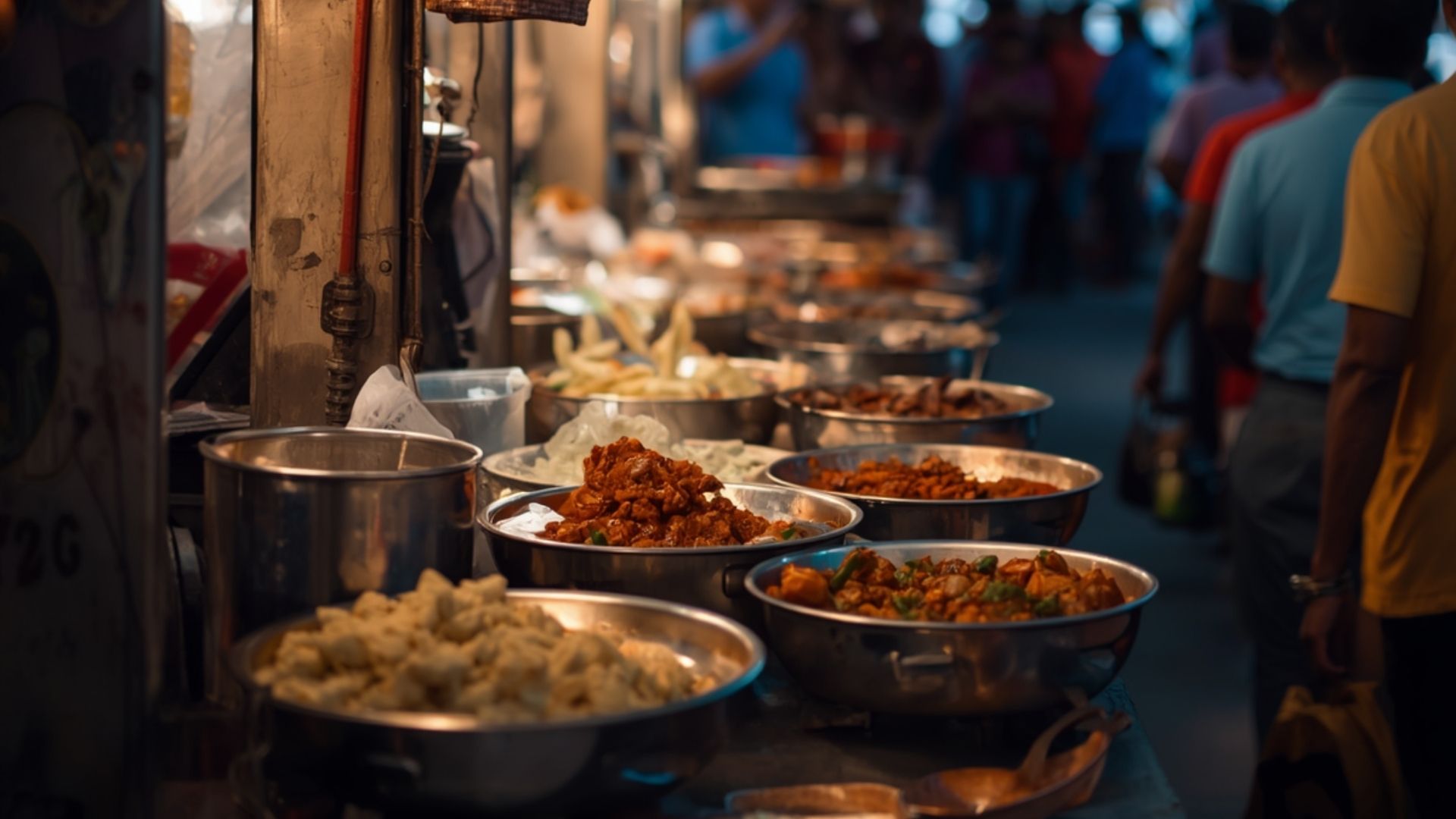
Chennai’s streets defy the unhealthy label with sheer popularity. Vendors cluster at corners, beaches, and bus stands, frying, steaming, and grilling from dawn to midnight. Idli-sambar carts roll through T. Nagar at 7 a.m.; vada stations crisp medu vadas, donut-shaped lentil fritters, alongside bajjis, which are onion, banana, or chilli stuffed in gram flour batter.
Mint Street, the Chaat Capital, bursts with North Indian imports: aloo tikki, spiced potato patties; pani puri, hollow crisps filled with tamarind water; and masala puri from Kakada Ramprasad, a 1950s institution. Burma Bazaar, near Parry’s Corner, serves atho, Burmese noodles tossed with cabbage, chickpeas, and lime, a relic of WWII-era migrants.
Seafood streets shine near Marina Beach: Sundari Akka Kadai fries nethili, anchovies, in red masala, fresh from dawn catches. Pooja Fish Fry grills pomfret and prawns on banana leaves. East Coast Road elevates this: C Salt beachside shack serves crab pepper fry with ocean views, while RE Biriyani dishes Ambur-style biryani to late-night crowds.
Food streets amplify the surge: Anna Salai’s 24-hour chains like KFC mix with locals; Genesis on ECR offers biryani and chaat; KC in Kandhanchavadi specializes in kebabs and shawarma. Post-2020, hygiene pushes have elevated street food, with flea markets at Kathipara Urban Square blending eats with play. Jigarthanda, a cool milk-based drink with agar-agar and badam powder, refreshes amid heat, while jalebis and boli, a sweet flatbread, tempt for desserts.
Street food is also gendered: women dominate sweet stalls like jalebi and boli, while men handle frying vadas and grilling meats. Yet, all converge in the evening rush, when office workers and students alike grab ₹20 to 50 snacks.
Biryani’s Reign: Rice, Meat, and Memory
No Chennai story skips biryani, a rice-meat fusion with Muslim roots tracing to Arcot and Ambur. Chicken, mutton, egg, veg, or beef variants simmer with spices like star anise, bay leaf, and stone flower; Ambur-style stars at RE Biriyani on ECR, served with brinjal gravy and raita. It’s a weekend staple, a family feast, a bachelor’s lifeline.
Ponnusamy Hotel in Royapettah, operating since the 1950s, roasts quail in fiery masala, proving meat’s prominence in a veg-heavy city. Buhari Hotel on Anna Salai claims invention of Chicken 65, a deep-fried spicy snack now ubiquitous.
Served in paper cones or banana leaves, biryani costs ₹150 to 400, varying by meat type. Beef biryani, though controversial, thrives in Muslim neighborhoods like Triplicane. Dindigul Thalappakatti, a chain born in 1957, scales Ambur biryani citywide, its sealed pots locking in aroma.
Biryani’s evolution mirrors Chennai’s: from royal courts to street carts, it’s adapted to budgets and tastes. Veg biryani, with carrots and beans, caters to vegetarians; egg biryani fuels laborers. It’s the great equalizer.
Vegetarian Core: The Silent Majority
Vegetarianism thrives, effortless amid non-veg labels. Chettinad influences bring peppery veggie curries; paneer Madras or vindaloo spice up plates. Rice rules: cumin, tamarind, or lemon varieties with poppadums, pickles, and chutneys. Millet pongal, a hearty savory porridge, gains traction for health.
Thalis dominate lunches: Sambar-rasam-rice-curd sequences in Brahmin households; veg thalis at Saravana Bhavan chain scale it globally. Costing ₹100 to 250, they’re office-canteen staples.
Vegetarianism isn’t just dietary; it’s cultural. Brahmin communities eschew onion-garlic, favoring satvik meals; Chettiars layer veggies with coconut oil. Temples serve annadanam, free rice meals, to thousands daily, reinforcing rice’s sacred status.
Modern twists emerge: quinoa upma at health cafes, jackfruit biryani at vegan spots. Yet, the core holds: rice, lentil, coconut.
Seafood and Meat Edges: From Tide to Plate
Fishing heritage shines in nethili fry at Sundari Akka Kadai or Pooja Fish Fry near beaches. East Coast Road spots like C Salt elevate it beachside. Meen kuzhambu, fish curry, simmers with tamarind and shallots; prawn masala crackles in Chettinad style.
Meat lovers hit Ponnusamy for chettinad chicken or Pallipalayam chicken. Reddit locals rave about vadacurry with poori at Maari Hotel in Saidapet, or aatu kaal paaya, trotter soup. Mutton chukka, dry-fried with curry leaves, pairs with parotta flaky bread.
Seafood’s seasonality matters: monsoon brings pomfret; summer, prawns. Fishing communities in Royapuram and Kasimedu supply daily catches, their boats returning at dawn. Meat, meanwhile, flows from Perambur slaughterhouses to roadside grills.
Non-veg isn’t taboo; it’s contextual. Muslims feast on beef biryani during Eid; Christians grill fish at Christmas; Hindus indulge in mutton for Pongal.
Influences and Evolution: Old Meets New
Tamil roots meet migrants: North Indian chaat, Gujarati snacks, Burmese atho. Tech boom adds global touches like Korean and Turkish, but dosa remains king. Post-2020, hygiene pushes elevated street food; flea markets at Kathipara Urban Square blend eats with play.
Swiggy and Zomato report rising orders for healthy bowls, but traditional tiffins lead.
IT corridors in OMR spawn fusion: sushi dosas, pizza uttapams. Yet, purists scoff: Why fix what isn’t broken? Migrants from Andhra bring gongura pickle; Bengalis, mishti doi. Chennai absorbs, adapts, but never abandons.
Sweet Endings and Drinks
Jigarthanda cools; ras malai at Ajanabi sweetens. Filter coffee’s froth defines afternoons. Payasam, sweet pudding, closes feasts; mysore pak, ghee-laden squares, gifts guests.
Chennai on an average consumes about 2.3-3.1 coffee cups per day as on 2024.
Sweets mark milestones: laddoos at weddings, halwa at festivals. Madras Milk Sweet, a condensed-milk fudge, is a souvenir staple. Drinks evolve: tender coconut water at beaches, sugarcane juice at stalls, but coffee endures.
Festive Feasts: Food as Celebration
Pongal, the harvest festival, centers on ven pongal, sweet rice-lentil mix, offered to the sun. Families cook in clay pots, letting milk boil over, a symbol of abundance.
Diwali brings adhirasam, rice-jaggery fritters, and murukku, spiral crackers. Eid features sheer khurma, vermicelli pudding; Christmas, appam with stew.
Weddings sprawl: 21-course Brahmin meals, Muslim biryani buffets. Food is love, measured in plates served.
Economic Engine: Food’s Hidden Weight
Food drives Chennai’s economy: from rice mills in Thanjavur to fish markets in Kasimedu. Street vendors employ thousands; restaurants, lakhs.
Inflation bites: rice prices fluctuate; lentils spike. Yet, demand holds: Chennai eats, recession or boom.
Cultural Pulse: Food as Identity
Food binds Chennai: breakfast idlis for workers, biryani feasts for families, street chaat for youth. Fishing villages birthed seafood; Mughals gifted biryani; migrants spiced streets. Rice and lentils anchor daily life, with meat as bold accents. In April 2026, as global policies ripple, Chennai eats unchanged, rooted and resilient.
The average daily household food spend is about 150-1500 as per NSSO.
Key Spots Table
| Area | Must-Try Dish | Vendor Example | Price Range (₹) | Notes |
|---|---|---|---|---|
| Besant Nagar | Podi Idli | Murugan Idli Shop | 50–100 | Ghee-slathered |
| Marina Beach | Nethili Fry | Sundari Akka Kadai | 80–150 | Fresh anchovies |
| Mint Street | Chaat (Aloo Tikki) | Kakada Ramprasad | 40–80 | Crispy North Indian |
| ECR | Ambur Biryani | RE Biriyani, Genesis | 150–350 | Spicy rice-meat |
| Royapettah | Kadai Roast | Ponnusamy Hotel | 200–400 | Fiery quail |
| Anna Salai | Chicken 65 | Buhari Hotel | 120–250 | Bar snack classic |
| Triplicane | Beef Biryani | Local Muslim Stalls | 100–200 | Controversial favorite |
| T. Nagar | Medu Vada | Street Carts | 20–40 | Morning crunch |
| OMR | Fusion Dosa | IT Cafe Chains | 150–300 | Modern twist |
Conclusion: A City That Feeds Forward
Chennai eats not for trend, but for truth: rice as rhythm, spice as soul. From 6 a.m. idlis to 2 a.m. biryanis, it’s a metropolis that honors its past while nibbling the future. Hard stats would quantify this, and are eagerly awaited from TN govt releases, but the streets speak louder: in every steamed idli, every fried vada, Chennai declares its identity.
As the city grows, with skyscrapers shadowing old tiffin centers, its food remains the great equalizer. A CEO and a coolie share the same sambar rice; a tourist and a local queue for the same jigarthanda. Chennai’s plate is its passport, its pride, its pulse. And as long as rice ferments and coconuts grate, that pulse will beat on.

