


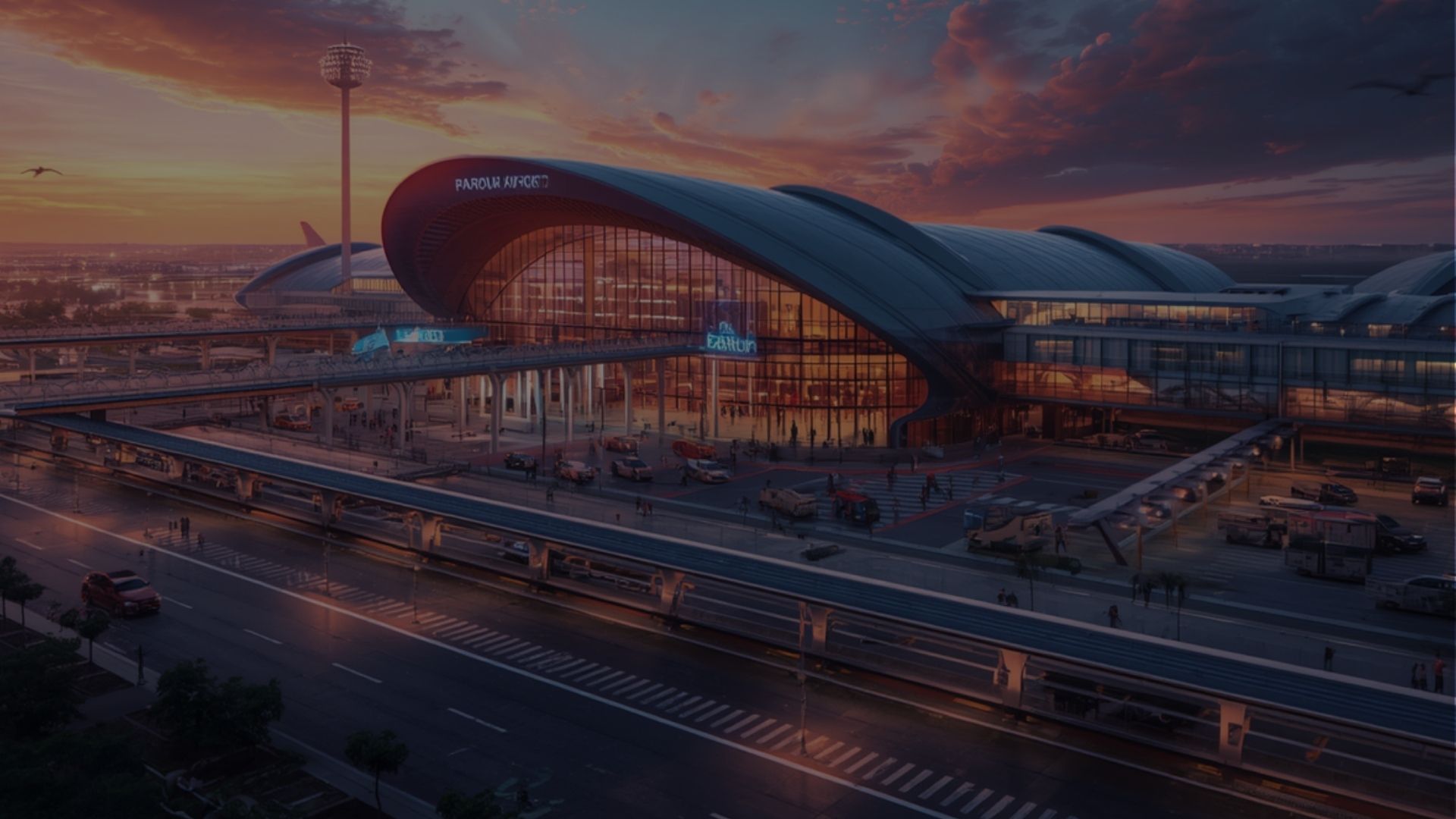
An investigative analysis of the site selection, expert objections, environmental stakes, and the hard questions that remain unanswered
The idea of a second airport for Chennai is not new. It has been floated, shelved, reconsidered, and resurrected in some form or another since 1998. What is new and consequential is that it finally has a name, a location, a price tag, and a central government approval. It is called the Parandur Greenfield Airport, it sits roughly 60 to 70 kilometres west of Chennai’s existing Meenambakkam terminal in the Kanchipuram district, and it is projected to cost somewhere between ₹27,400 crore and ₹32,705 crore across four development phases, with an additional ₹11,000 crore earmarked for the metro rail link from Chennai to the site.
The Ministry of Civil Aviation granted in-principle approval in April 2025. Land acquisition has begun, with roughly 3,000 acres secured out of the 5,746 acres required. Protests have crossed a thousand continuous days in at least one village. A new state law was passed some say hastily specifically to accelerate land consolidation. And a set of technical objections raised by credentialled aviation professionals appear to have been quietly set aside.
This is not a story about whether Chennai needs a second airport. On that question, the data is fairly unambiguous. It is a story about whether Parandur is the right place, and whether the process that led to this choice was as thorough and honest as a project of this scale demands.
Why Chennai Cannot Afford to Wait
Chennai International Airport, operating under the IATA code MAA, handles roughly 22 million passengers annually. As far back as 2019, the airport was already processing around 2.2 crore passengers per year well beyond its designed throughput of around 1.5 crore. The terminal operates under persistent strain: slot congestion, crowded aprons, and delays that compound through the day. Even after a planned modernisation of the existing facility, its maximum capacity will sit at approximately 35 million passengers per annum, a figure that current growth trajectories will breach well within the next decade.
The airport is also landlocked. Unlike Mumbai’s Chhatrapati Shivaji Maharaj International Airport, which has squeezed incremental capacity out of reclaimed land and runway optimisation, or Delhi’s Indira Gandhi International, which sprawled across a large land parcel, Chennai’s Meenambakkam facility is hemmed in by the city itself. There is simply no acreage available for a meaningful third runway or substantial terminal expansion that would last beyond the 2030s. The existing airport is expected to reach saturation by 2035.
India’s civil aviation sector is also growing at a rate that outpaces most of the world. The government intends to expand the country’s total number of airports from 149 to 200. National passenger volumes are climbing steeply, and Chennai, as India’s fifth-busiest airport and the gateway to southern industry and the Tamil diaspora, is at the centre of that pressure. A new airport is not a question of ambition. It is a matter of operational necessity.
The real debate, then, is not whether to build but where and the answer chosen is a site that has generated more controversy than almost any other infrastructure decision in recent Tamil Nadu history.
The Long Road to Parandur
Site selection for a second Chennai airport has been dragging since at least 2007, when the then Chief Minister announced a new airport at Sriperumbudur. That project never broke ground, primarily because of land acquisition difficulties. In 2012, the idea resurfaced. By 2022, the Tamil Nadu government had narrowed a fresh shortlist to four candidates: Padalam, Thiruporur, Pannur, and Parandur.
The Airports Authority of India conducted a feasibility study and narrowed the field further to Pannur and Parandur. In August 2022, following a meeting in New Delhi between Union Civil Aviation Minister Jyotiraditya Scindia and a Tamil Nadu delegation led by Industries Minister Thangam Thennarasu, the state government formally selected Parandur.
The official rationale favoured Parandur over Pannur on several grounds. Parandur required fewer family relocations 1,005 households in the feasibility estimate compared to 1,546 at Pannur. The site sits near the proposed Chennai-Bengaluru Expressway, offering better road connectivity to the industrial belt around Sriperumbudur. It also, according to the site clearance process, avoids the densest clusters of industrial infrastructure. The Ministry of Defence issued a No Objection Certificate for site clearance, a critical milestone given the presence of military air assets in the region.
By September 2024, the Centre’s Steering Committee approved the Parandur site. Site clearance was formally granted in August 2024. In-principle approval followed in April 2025. On paper, the project is moving.
But to accept the administrative timeline as the full story would be to miss the substantive challenges that have been raised and in several cases, raised by people with specific technical knowledge of what building an airport here actually involves.
What the Ground Actually Looks Like
One of the more striking features of the Parandur site is that a significant portion of it is not really solid ground.
Environmental assessments cited by multiple organisations indicate that around 64 per cent of the proposed project land comprises wet and dry agricultural areas, while approximately 27 per cent consists of lakes, ponds, and pools. The site reportedly contains around 40 water sources with a combined storage capacity of approximately nine million cubic feet, of which 34 fall within or close to the proposed airport boundary. Among these is a natural drainage channel connecting the Kesavaram dam to the Cooum River, as well as a substantial stretch of the 42-kilometre Kamban Canal, which carries water from the Palar dam to Sriperumbudur Lake.
Environmentalists warn that development at this scale could severely disrupt natural drainage networks, groundwater recharge systems, and flood mitigation mechanisms that serve not just these villages but the broader Chennai Metropolitan region. One environmental survey cited by activists notes that over 22,000 acres of agricultural land outside the direct project footprint could face long-term consequences from disrupted hydrology.
Around 36,000 trees are expected to be felled. Some 130 bird species have been recorded in the Parandur region, including 28 migratory species and seven classified as vulnerable or near-threatened. This is not a degraded or marginal landscape. It is a functioning agricultural ecosystem with ecological significance extending well beyond the airport boundary.
The implications for construction costs are also significant. Building on clayey soil interspersed with water bodies is not merely an environmental concern — it is a major structural and financial one. Foundations on waterlogged land require pile driving, drainage engineering, and ongoing monitoring in ways that elevate costs and extend timelines. Captain Mohan Ranganathan, an aviation safety consultant and former member of the Civil Aviation Safety Advisory Council, has stated that 60 per cent of the proposed airport site consists of water bodies and clayey soil, and that this poses both cost escalation risks and long-term structural hazards. His projection that managing the soil conditions alone will drive costs far beyond current estimates has not been publicly rebutted by the government with specific counter-data.
The Expert Warnings That Were Ignored
Captain Ranganathan’s objections to the Parandur project extend beyond soil conditions. In interviews with The Federal in March 2025, he called the project a “recipe for disaster,” raising specific concerns about airspace conflicts, safety planning, and what he described as a systemic refusal by the Ministry of Civil Aviation to engage with expert criticism.
His concerns about military airspace deserve particular scrutiny. Parandur sits in proximity to two significant defence installations: the Indian Navy’s INS Rajali at Arakkonam, which operates the longest military runway in Asia and houses P-8 Poseidon maritime reconnaissance aircraft, and the Indian Air Force’s training station at Tambaram. Ranganathan argues that a commercial airport at Parandur will create serious airspace conflict with these military facilities, and that obtaining the necessary ongoing operational clearances as distinct from the site clearance NOC already granted will involve years of complex negotiation.
It is worth noting that the Ministry of Defence did issue a NOC for site clearance, which should not be dismissed. But a NOC for site clearance is a different matter from long-term de-confliction of civilian and military flight paths over a densely contested airspace. Ranganathan points out that Sriperumbudur was previously rejected as a second airport site in an earlier planning cycle specifically because of defence airspace conflicts. His argument is that Parandur’s proximity to the same military assets poses comparable problems that a site clearance NOC does not resolve.
Ranganathan’s broader concern is one of institutional culture. He served on the Civil Aviation Safety Advisory Council and, along with colleagues, raised safety and planning concerns that he says were repeatedly overridden. When their warnings became politically inconvenient, he claims, the committee members who raised them were removed. “The ministry does not like anyone pointing fingers,” he said. “When we highlighted safety concerns, we were dismissed.” Whether or not one accepts every one of his technical conclusions, the pattern he describes expert objection followed by institutional dismissal rather than engagement is one worth taking seriously, particularly given how often similar dynamics have preceded costly failures in Indian infrastructure.
There is also an older precedent specific to Chennai itself. Ranganathan cited the proposed secondary runway at Chennai Airport, where, following the 2015 floods, expert warnings about safety and feasibility were overridden. The result was infrastructure that he describes as substandard. He draws a direct parallel to Parandur, arguing that the city is making the same kind of decision with far higher stakes.
An alternative his critics have also advanced is that the existing Chennai Airport could be expanded more aggressively Ranganathan himself suggests reclaiming adjacent defence land and restructuring the facility along the lines of London’s Gatwick, which handles an enormous volume of traffic from a constrained single-runway site. The government’s counter is that this expansion path cannot realistically address the scale of long-term demand growth, and that the city needs a genuinely new airport, not just a larger version of a congested one. That counter-argument has merit, but it does not answer the specific technical objections about Parandur’s soil, airspace, and hydrology.
Crucially, villagers who have requested access to the hydrography reports prepared by IIT Madras and Anna University, as well as the techno-economic feasibility study by Louis Berger Consulting, have been denied access under RTI. For a project that has now passed a thousand days of community protest, and where independent verification of technical data is being actively sought, this opacity is difficult to justify on any ground beyond political convenience.
The Social Cost and Who Bears It
Any honest account of the Parandur project must reckon with what it is doing to the people who live there.
The government’s own feasibility report initially estimated 1,005 households requiring resettlement. RTI documents obtained by civil society groups put the actual number of people impacted at around 13,000, with 6,356 requiring full resettlement from seven villages. The gap between the official estimate and the RTI-derived figure is not small it represents thousands of lives whose disruption was either not anticipated or not disclosed.
The village of Ekanapuram has become the centre of organised resistance. Approximately 650 families face full displacement, and residents there have maintained continuous protest for over a thousand days. Protests in other villages including Nelvoy, Nagapattur, and Parandur have drawn broad community participation. In one instance, villagers from Ekanapuram and Nagapattur boycotted the 2024 parliamentary election entirely as a political act of opposition.
Farmers’ specific concerns run deeper than just monetary compensation, which is being calculated at five to six times current market value under the Right to Fair Compensation and Transparency in Land Acquisition Act. Agriculture here is not simply an economic activity. It is the anchor of a water commons. Paddy cultivation depends on free access to communal irrigation water from the very lake systems that the airport will disrupt or destroy. When that water security is gone, no land compensation can simply replace what is lost. Farmers are not just losing income they are losing access to a way of life structured around a specific ecology.
The state government’s legal manoeuvre is also telling. To accelerate land acquisition over water bodies which are legally protected and would ordinarily stall the process the Tamil Nadu government passed the Tamil Nadu Land Consolidation (for Special Projects) Act in April 2023. The legislation was introduced and passed by voice vote on the same day, without debate. Whatever one makes of the airport’s merits, passing consequential legislation affecting thousands of people without floor debate is an institutional shortcut that erodes democratic legitimacy. The rules implementing the Act were only notified in October 2024, a year and a half after the law was enacted.
As of late 2025, roughly 3,000 acres had been acquired out of the total 5,746 required, with Ekanapuram where one of the key runways is planned remaining entirely unacquired due to ongoing resistance.
The Revenue Problem Nobody Wants to Discuss Plainly
There is a structural financial problem embedded in the Parandur decision that has received less attention than it deserves.
The Airports Authority of India, which operates Chennai’s existing airport, secured an explicit compensation clause as part of the conditional in-principle approval. The condition states that the Tamil Nadu government must compensate AAI if Parandur becomes operational before Chennai Airport reaches its full 35 million passengers per annum capacity. If traffic at Meenambakkam exceeds 35 MPPA before Parandur opens, no compensation is required but if the new airport opens first, the state is on the hook.
This clause exists because a second airport in the same metro region will necessarily split passenger traffic, reducing revenue at both facilities during the transition period. This is not speculation. Dual airport cities around the world have faced this dynamic: the first facility loses market share and non-aeronautical revenue before the second has achieved scale. At Indian airports, non-aero revenue per passenger already significantly underperforms global benchmarks the country’s major hubs averaged around $4.3 per passenger in non-aero revenue against $7 to $14 at leading international airports. A traffic split compounds this weakness.
The AAI compensation clause is an acknowledgment of the problem, but it is not a solution to it. It transfers financial risk from AAI to the state government which itself faces fiscal constraints while simultaneously funding the metro link (₹11,000 crore), land compensation (₹15,490 to 18,220 crore), and the airport development itself (₹27,400 to 32,705 crore). When these figures are aggregated, the total public financial exposure is substantial.
There is also the question of airline network economics. A second airport positioned 60 to 70 kilometres from the city centre is not automatically attractive to carriers. Airlines particularly low-cost carriers, which dominate Indian domestic aviation make slot decisions based on passenger catchment, connectivity infrastructure, and turnaround economics. London’s Heathrow-Gatwick model works partly because Gatwick has superb rail connectivity to central London. Delhi’s planned Noida International Airport required extensive airspace restructuring, including sophisticated simulation models and flight-path redesigns validated for dual-airport operation, before approval was granted. Whether Parandur will achieve the connectivity benchmarks needed to attract airlines and by extension, the passengers whose revenue justifies the investment depends heavily on the metro link and expressway integration being delivered on time and at cost.
Given that Phase I completion has already slipped from 2028 to approximately 2030, and given that the expressway and metro connections are themselves multi-year projects, the timeline for Parandur achieving commercial viability is not a straight line.
The Case for Parandur, Stated Fairly
It would be dishonest to present only the concerns without acknowledging why the Airports Authority, the Ministry of Civil Aviation, and the Tamil Nadu government have pushed ahead despite them.
The capacity argument is real. Chennai’s existing airport will not cope with the region’s long-term aviation demand. The modernisation of Meenambakkam to 35 MPPA, combined with its existing constraints, will buy perhaps a decade and building an airport takes the better part of a decade. If the process starts now and encounters no delays, Parandur’s Phase I might open around 2030, just as Meenambakkam is approaching saturation. Any further deferral risks a capacity cliff that would genuinely harm Tamil Nadu’s economic competitiveness, particularly in sectors like automotive and electronics manufacturing around Sriperumbudur that depend on air freight.
The site’s proximity to the Chennai-Bengaluru Expressway is a legitimate strategic asset. The Sriperumbudur industrial corridor, home to major manufacturers including Samsung, Hyundai, and Foxconn, generates significant freight demand that a well-placed cargo terminal could serve efficiently. Second airports built near industrial corridors, as with Hyderabad’s Rajiv Gandhi International Airport, can achieve commercial viability partly on the strength of cargo, not just passengers.
The preference for Parandur over Pannur on displacement grounds is also defensible in relative terms, 1,005 households versus 1,546 is a meaningful difference, even if the eventual figure of 13,000 affected people renders that comparison less comforting than it initially appeared.
Comparable greenfield airports, Hyderabad (2008), Bengaluru’s Kempegowda, Kochi, all faced serious objections at approval and are now considered broadly successful infrastructure investments. They also all ran into land acquisition friction, environmental concerns, and cost overruns. The pattern of controversy does not automatically indicate a wrong decision; it may simply reflect the difficulty of building major infrastructure in populated landscapes anywhere in the world.
And on the military airspace question: the Ministry of Defence’s NOC, however limited in scope, does suggest that at the bureaucratic level, some degree of de-confliction has been mapped. Ranganathan’s concerns are serious, but they are not the same as no analysis having been done.
What Remains Unresolved
Four questions remain largely unanswered in public documentation.
First, the hydrological risk has not been publicly quantified by the government. The IIT Madras and Anna University studies on the site’s hydrology exist but have not been released. This matters enormously: building on a site where 27 per cent of the land is water bodies, with interconnected cascading lakes feeding river systems that supply Chennai’s water, is not a minor engineering challenge. Without public access to independent hydrological assessment, it is impossible to know whether the risk has been modelled honestly or optimised away.
Second, the airspace conflict with INS Rajali and Tambaram has been addressed only at the level of site clearance, not at the level of operational flight path planning. Given that INS Rajali has the longest military runway in Asia and conducts active P-8 surveillance operations, the eventual airspace integration between military and commercial operations in this corridor requires far more than a NOC. No detailed airspace restructuring study has been made publicly available.
Third, the true displacement figure — 13,000 people against the official estimate of 1,005 households — has never been officially reconciled. Which number is the government planning and budgeting around? The difference is not marginal.
Fourth, the financial model for making Parandur commercially viable has not been published. The compensation clause inserted by AAI suggests even the central agency is uncertain about revenue trajectories. The project needs a serious, public analysis of how the airport will reach financial equilibrium given the traffic split, the delayed connectivity infrastructure, and India’s structural weakness in non-aero airport revenues.
A Decision That Cannot Be Undone Carelessly – And May Yet Be Revisited
Chennai needs a second airport. That sentence is not contested by anyone who has looked at the traffic data. What is contested is whether Parandur with its water bodies, its military airspace proximity, its mass displacement, its geologically challenging soil, and its distance from the city is the right site, chosen through a process rigorous enough to justify the irreversibility of what comes next.
The people of Ekanapuram have been protesting for over a thousand days. They are not protesting because they oppose development. They are protesting because their lands and their water are being taken, and the technical studies that might justify or challenge that decision have been withheld from them. That is not how a democratic government should build the infrastructure of the future.
The aviation expert who served on the government’s own safety council was removed after raising objections. That is not a reassuring signal about the integrity of the technical review process.
And the law enabling faster acquisition of water body land was passed in a single day without debate. Whatever the airport’s merits, the means matter.
As of May 2026, the project’s future is genuinely uncertain in a way it was not even six months ago. The Tamil Nadu Assembly elections produced a fractured mandate, with the Tamilaga Vettri Kazhagam led by C. Joseph Vijay, who spent more than 900 days openly opposing the Parandur project and visiting protesters at Ekanapuram emerging as the dominant political force and forming the state government. Vijay, who during his campaign said he was not opposed to infrastructure development as such but was specifically opposed to the choice of Parandur given its environmental and displacement costs, has now reportedly ordered a “status quo” on the project. Land acquisition has been halted pending a comprehensive review. Sources cited in Tamil media indicate the Chief Minister may revoke the Government Order under which the project was designated a Special Project.
The project sits in administrative limbo. Around 3,000 of the required 5,746 acres have been acquired and compensation paid, but Ekanapuram where one of the two planned runways is sited remains entirely unacquired and in active resistance. The central government’s in-principle approval remains on record. The AAI compensation clause remains in force. But without state-level administrative support, no concessionaire tender can be floated and no construction can begin.
What happens next is not clear, and anyone who claims otherwise is speculating. Vijay may scrap the project outright, invoke promises made to the farmers of Ekanapuram, and face the central government’s response. He may seek an alternative site, a search that, if the history of this process tells us anything, will take years. Or, under the weight of industrial lobbying, fiscal reality, and central pressure, he may eventually allow the project to proceed with modifications to compensation and process. The manifesto silence on Parandur, noted by many observers, leaves room for all three outcomes.
What this political turn does confirm, more powerfully than any protest or expert testimony alone could, is that the process by which Parandur was chosen was not as settled or as technically watertight as the previous government’s approvals suggested. A decision made with genuine democratic legitimacy and a transparent technical record would not be this fragile. The fact that a change of government is enough to throw the entire project into question says something important about the foundation on which it was built.
Those who raised concerns about the site deserve a proper public answer. So does every farmer waiting to know whether the land they surrendered was surrendered for something real or for a runway that may never be built.
Chennai will need a second airport. Whether it will be at Parandur, and on what terms, remains an open question.
Research for this article draws on official government documents, parliamentary responses, feasibility studies in the public domain, RTI-obtained records cited by civil society groups, environmental assessments by activist organisations, and media interviews with aviation safety expert Captain Mohan Ranganathan. The Spirit of Chennai has not independently verified the hydrological studies, which remain undisclosed by the government.

