


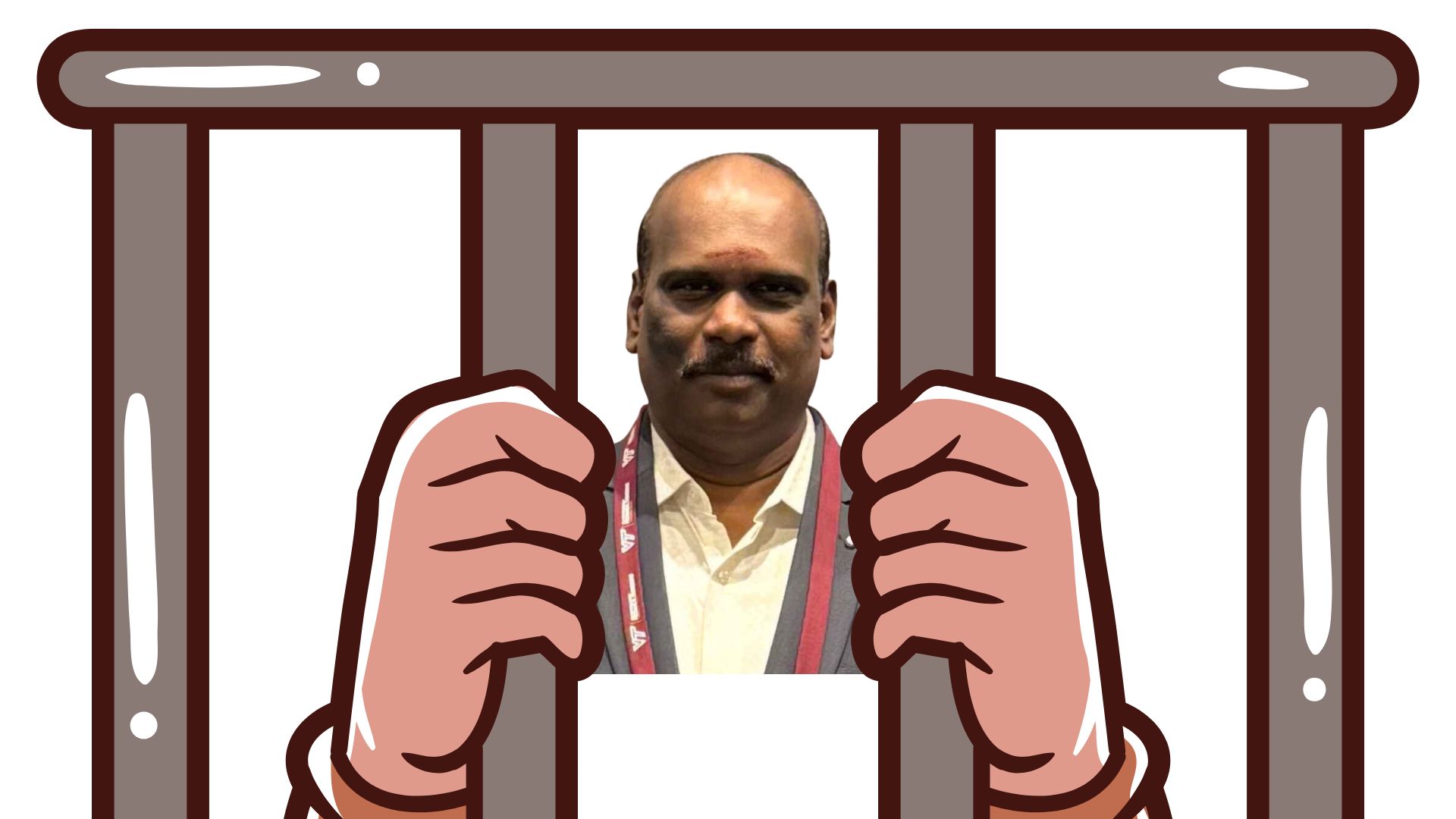
Students of the College of Engineering, Anna University staged a protest on campus on Friday, alleging complete inaction in spite of multiple complaints of sexual harassment against a professor. The Registrar of Anna University suspended Professor Gnanavel Babu after a complaint of sexual harassment was filed by a student. The professor was arrested by Chennai police on Friday after they tracked him to the Tirunelveli region while he was attempting to evade authorities.
A fourth-year student filed a complaint with the Greater Chennai Police Commissioner, alleging that the professor had been subjecting her to continuous sexual harassment over three years. The student claimed he initially gained her trust by offering academic support after learning about her family’s financial situation, but his behavior changed, beginning in her third year with inappropriate conversations about the female body and frequently calling her. Students demanded that the professor be suspended pending inquiry and that an independent committee be constituted to individually record statements from all women students in the department.
History of Complaints and Protective Legal Framework
Students of the department said they had filed two POSH complaints against the professor in the last two years, but no action was taken, citing lack of sufficient evidence. Students accused the university’s internal mechanism of failing to act, alleging that the university’s Internal Complaints Committee (ICC) under the Prevention of Sexual Harassment (POSH) framework was “protecting its own” and not conducting proper investigations. This pattern of institutional inaction highlights systemic failures in existing complaint mechanisms designed to protect students.
India’s legal framework includes several protections against sexual harassment in educational institutions. The primary statute is the Prevention of Sexual Harassment of Women at Workplace (Prevention, Prohibition and Redressal) Act, 2013, which mandates that all institutions establish Internal Complaints Committees to address harassment complaints. Additionally, the Indian Penal Code (IPC) provides protection under sections addressing criminal intimidation, obscene communication, and sexual offenses. Educational institutions are also governed by University Grants Commission (UGC) guidelines that require campuses to implement anti-harassment policies and conduct regular training programs. Despite these comprehensive legal provisions, the Anna University case demonstrates that the existence of laws alone is insufficient without rigorous implementation, timely investigation, and meaningful disciplinary action. The failure of the POSH committee to act on two prior complaints represents a critical breakdown in the institutional accountability mechanisms that these laws establish.
Police confirmed that at least four other students have also come forward with complaints against the professor, and investigations into those allegations are underway. This incident at Anna University has once again brought concerns over campus safety. This comes barely over a year after the high-profile 2024 sexual assault case. The incident highlights ongoing issues with institutional accountability and student safety at the university, making it a critical healthcare and education concern for Chennai’s residents.

