
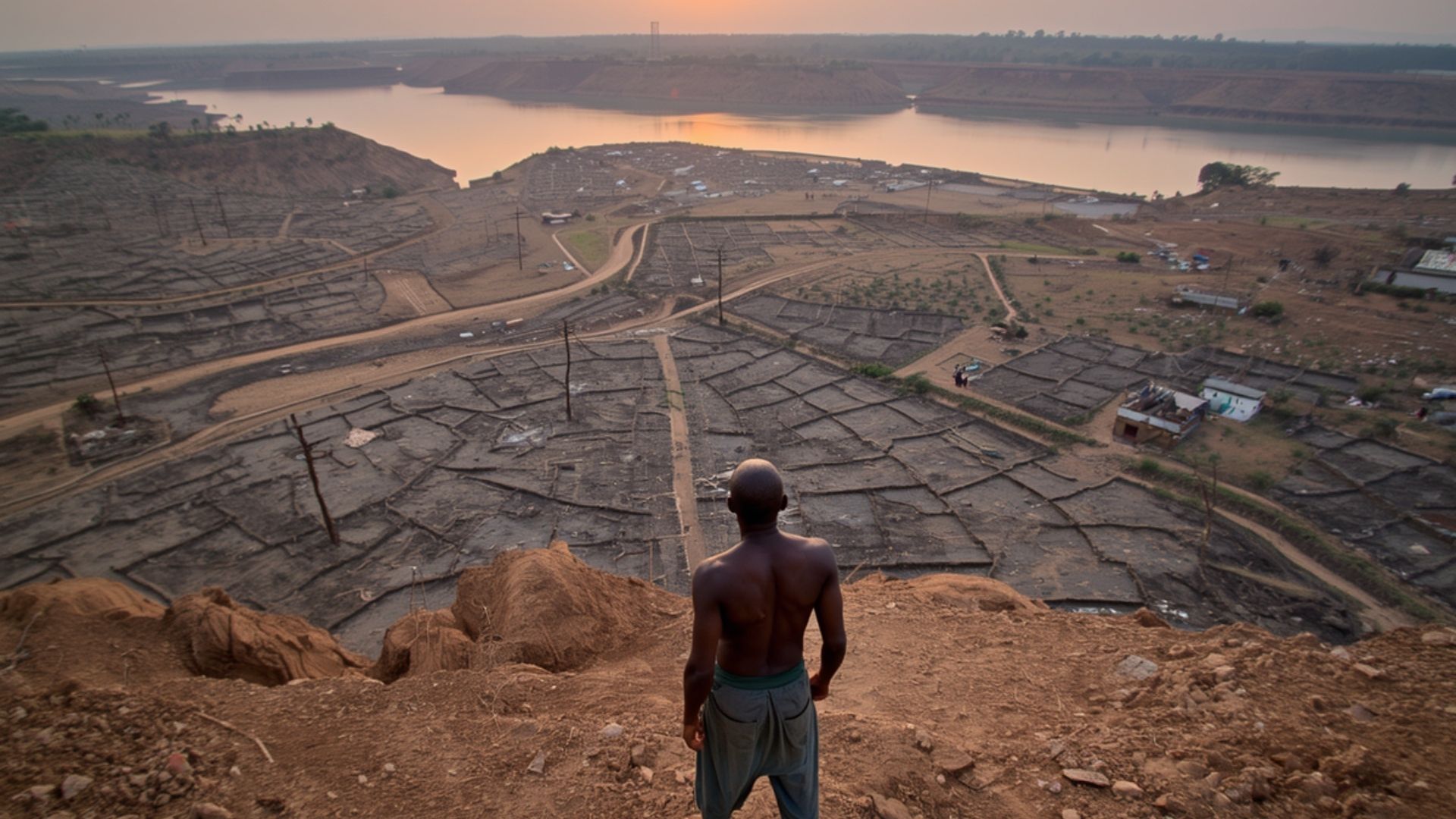
Along the East Coast Road south of Chennai, one of India’s most ecologically rich coastal wetlands is facing an existential threat not from climate change or pollution, but from a government infrastructure project that many experts warn may be solving one crisis by creating another.
The Wetland Between Two Roads
Sandwiched between the East Coast Road (ECR) and Old Mahabalipuram Road (OMR), stretching from the fishing hamlets near Kanathur in the north down to Kokilamedu in the south, lies the Kovalam-Nemmeli backwater system, a tidal-marsh ecotone covering over 8,500 acres. Dotted with mangroves, seagrass patches, salt marsh vegetation, and mudflats that teem with migratory waders, the wetland is one of the last intact brackish-water ecosystems along Tamil Nadu’s urbanising coastline.
The system functions as a tidal lagoon, maintaining two open connections to the Bay of Bengal, a northern inlet at Kovalam and a southern one at Kokilamedu. Twice a day, seawater surges in and out, regulating salinity, temperature, and the circulation of nutrients that sustain the extraordinary biodiversity within. The backwaters are not an inland freshwater depression but a tidal-marsh ecotone hydrologically connected to the Bay of Bengal through the Kovalam and Kokilimedu inlets.
For the fishing communities who have lived along this coastline for generations, the wetland is not merely a scenic backdrop. It is an economic lifeline, a food source, and a living archive of ancestral knowledge. More than 16 fishing villages, home to thousands of families depend on its waters for their daily catch and income.
Chennai’s Water Arithmetic
To understand why this wetland is under threat, one has to look at Chennai’s mounting water crisis. The city has long struggled to balance a rapidly growing population against a chronically underpowered water supply infrastructure. Chennai, with a population of 9 million, faces a chronic imbalance in water demand and supply. Despite a monthly demand of 2,232 million litres per day (MLD), CMWSSB supplies only 1,070 MLD, resulting in a persistent demand-supply gap.
The gap is not a new problem. In June 2019, the city famously reached what urban planners call “Day Zero” — all four of its main reservoirs ran completely dry, forcing the metropolitan water board to resort to emergency trucking. The experience shocked city administrators and accelerated the search for new water storage options. The total water demand in the Chennai basin will rise from about 2,479 MCM in 2025 to 2,728 MCM by 2050, driven by a 34 percent increase in population over the same period.
Rapid urbanisation has compounded the problem significantly. Urbanisation has led to the loss of 13.6 million cubic metres of tank storage within Chennai city, while an additional 175 MCM of tank storage has been lost in the wider basin. The loss of traditional tank systems that historically buffered water availability has left the city increasingly exposed to drought years.
Against this backdrop, the Tamil Nadu government announced a bold solution: Tamil Nadu’s first-ever coastal freshwater reservoir.
The Mamallan Project
Tamil Nadu Chief Minister MK Stalin inaugurated the Mamallan reservoir project, intended to boost Chennai’s drinking water supply. This significant infrastructure development marks the sixth dam for the city, complementing existing resources like other dams, Veeranam lake, and desalination plants. The project was announced in the 2025–26 state budget and the foundation stone was laid on January 19, 2026 at Vada Nemmeli.
The project, estimated at ₹342.60 crore, in the Kovalam basin, covers the land parcel between Thiruvidanthai and Kokilamedu, and would be implemented by the Water Resources Department to create the reservoir spread over 5,161.27 acres and with a storage capacity of 1.65 thousand million cubic feet (TMC). A 34-kilometre embankment is to be constructed around the reservoir to impound the water.
The government’s stated rationale is compelling on paper. Official documents report that Chennai currently requires 1,100 MLD against a supply of 700–800 MLD. The Mamallan reservoir, it claims, will capture surplus water draining from 69 upstream tanks across a catchment area of 41,408 hectares, supply 120 MLD to dozens of peri-urban settlements and 12 villages, and help mitigate both flooding and seawater intrusion into groundwater. The project presents itself as a paradigm shift — moving water storage from mountain dams to coastal estuaries, where the full volume of catchment runoff can be harvested.
What the project literature does not dwell on is what happens to the existing ecosystem when seawater is permanently shut out.
When Salt Becomes the Enemy
The Kovalam-Nemmeli backwaters are brackish, a dynamic blend of freshwater and seawater regulated by daily tidal exchange. This salinity gradient is not incidental; it is the very foundation of the ecosystem’s ecological value.
Marine biologists and ecologists have described the wetland as a nursery habitat of exceptional importance. Species of fish and shrimp travel from the open sea into the sheltered estuary to spawn and raise juvenile young, before returning to the ocean. The habitat also supports extensive populations of molluscs, bivalves, gastropods, and crustaceans and provides critical feeding grounds for both resident and migratory birds that arrive in enormous numbers from as far as Europe and Russia.
Restricting tidal flow drastically alters salinity balance, water temperature and circulation, limiting marine biodiversity. Brackish wetlands are among Tamil Nadu’s richest habitats, supporting fish nurseries, shellfish beds and migratory birds.
The consequences of salinity disruption are well-documented in scientific literature. Sudden changes in salinity, pH, and specific density can cause mass mortality events among species accustomed to brackish conditions. Converting the entire system to a freshwater regime would, according to ecologists, destroy these ecological functions within a single season and permanently alter species composition. The southern stretch near Mamallapuram remains ecologically vibrant precisely because tidal inflow continues, while the Nemmeli stretch has already shown early signs of lagoonal degradation where tidal connectivity has been reduced.
A coalition of leading scientists submitted a detailed petition to Chief Minister Stalin in February 2026 urging the government to withdraw the project. The signatories including ecologists, hydrologists, ornithologists and marine social scientists urged the government to protect the Kovalam–Nemmeli wetland on East Coast Road and, instead, declare it a protected lagoon ecosystem.
Critics have also pointed to the methodology of the project’s environmental assessment. The Rapid Environmental Impact Assessment (REIA) was conducted over just three months — a period that experts argue is entirely insufficient to capture the seasonal variation in salinity and biodiversity. A thorough assessment, they say, would require observation across at least two full monsoon cycles.
Communities at the Waterline
For the fishing villages scattered along this coastal stretch, Kovalam, Suleri-Kattukuppam, Thiruvidanthai, and more than a dozen others, the announcement of the reservoir has triggered deep anxiety. Many families in these communities have fished these waters for generations, their practices shaped by intimate knowledge of which species are found where, and when.
The community includes traditional sea fishers, inland fishers who work the backwaters by hand, Irular indigenous community members, fish vendors, net-makers, and salt pan workers. During peak season between September and December, the backwaters can generate daily incomes of ₹2,000–₹4,000 per fisherperson. Over a full three-month peak season, earnings of ₹1–3 lakh per family are not uncommon — money that pays off debts, funds school fees, and provides a financial cushion for the year ahead.
Particularly at risk are women and elderly fishers who do not go out to sea but rely on the accessible inland waters for their daily catch. Unlike deep-sea fishing, which requires boats and equipment, the backwaters can be worked on foot, making them uniquely valuable to the most economically marginalised members of fishing communities.
The stakes are also existential in a cultural sense. The Kovalam backwaters are not merely a water source but the lifeline of coastal communities. It supports fishermen from more than 16 villages. Traditional fishing techniques, specific nets for specific species, knowledge of spawning cycles, understanding of tidal rhythms have been transmitted across generations and are deeply embedded in the identity and practice of these communities. Once the ecosystem is altered, this accumulated knowledge loses its purpose and its practitioners.
A Pattern of Coastal Dispossession
The Mamallan reservoir is the latest in a long series of development projects that have progressively constrained the livelihoods of coastal communities along this stretch of Tamil Nadu’s coastline.
The 150 MLD Nemmeli desalination plant, built to serve the southern suburbs of Chennai with drinking water, was located along this same coastal belt. Residents of Suleri-Kattukuppam report that since the plant’s construction and subsequent expansion in 2016, the quality of sea fishing has declined sharply. The plant’s operations and associated coastal alterations, including effects on sand dunes, have contributed to seawater intrusion, salty groundwater, and coastal erosion in the immediate area. “After the plant came, the government began converting seawater to freshwater and let out treated water into the sea. The fish disappeared after that,” one panchayat member noted.
The fishermen questioned the legal validity of the CRZ clearance issued by the Tamil Nadu State Coastal Zone Management Authority on December 3, 2025. Concerns have also been raised about whether the project built across coastal wetlands adequately respects the Coastal Regulation Zone framework designed to protect such ecologically sensitive areas from development.
The Blue Flag Beach project, announced in 2021 in Kovalam and promoted as an eco-tourism initiative, similarly restricted traditional fishing practices including cast and seine netting, the drying of fish, and boat access to the coast. Tourism infrastructure, including over a hundred hotels and restaurants built close to the shore, has further degraded the coastal environment.
Meanwhile, unaddressed questions linger about who the Mamallan reservoir’s water will ultimately serve. Chennai is fast becoming a hub for data centres clustered around Siruseri, with 234 MW of non-AI and AI-ready centres. Data centres require uninterrupted supply of cooling water, even if monsoons fail. Critics note that the government’s own documents claim the reservoir will service the Siruseri technology corridor raising pointed questions about whether a project framed as a drinking water solution is in fact being engineered to meet the cooling demands of an energy-intensive industrial sector.
The Question of Alternatives
The fundamental tension in this debate is real. Chennai’s water deficit is not a bureaucratic invention. The city genuinely faces the prospect of severe shortages as its population and economy expand, its groundwater depletes, and its traditional tank systems continue to be lost to urban encroachment. Chennai continues to face recurring water challenges despite investments in desalination plants and storage facilities. Many residents still depend on tanker deliveries, particularly in areas where piped supply is limited or unreliable. The city’s heavy reliance on monsoon rains adds to its vulnerability, making water availability unpredictable each year.
But scientists and community advocates argue that the choice is not binary. As an alternative, the scientists have recommended that the state declare the salt marsh a protected coastal wetland under the name “Mamallan Lagoon” and initiate a restoration programme grounded in robust scientific research and the deep spatial knowledge of local communities.
Their alternative vision includes improving culvert capacity on the OMR to address flooding — a benefit the project’s own EIA claims as a goal and converting a key link road into a bridge to restore tidal flow. They argue that the city should instead invest in demand management, rainwater harvesting at scale, reuse of treated wastewater, and, if new supply must be added, further desalination capacity. Implementing various interventions concurrently could significantly reduce the demand-supply gap, with projected drops to 110 MLD by 2030, 250 MLD by 2040, and 454 MLD by 2050.
They also contend that the project as currently designed offers no permanent flood-mitigation benefit, since the tidal connectivity it destroys is itself part of the system’s natural capacity to absorb and regulate water flows.
Protests and Silence
In February 2026, weeks after the foundation stone was laid, residents of the 16 coastal fishing hamlets waded into the backwaters at Vada Nemmeli in organised protest. Getting into the slushy brackish waters, they raised slogans urging the State government to give up its project to create the Mamallan reservoir. Community leader R. Narayanan of Kovalam said that the fishing community was not given any opportunity to raise objections to the project that will lead to thousands of families losing their livelihoods.
Representatives of 16 fishing villages in Chengalpattu district, stretching from Kanathur Reddikuppam to Kokkilimedu, have mounted strong opposition to the proposed project, warning that it could erase traditional fishing livelihoods, damage fragile coastal wetlands and violate key provisions of the Coastal Regulation Zone framework. At a consultation meeting with a state minister prior to the foundation stone laying, communities formally submitted their objections — only to watch the ceremony proceed the following day.
Youth climate groups have situated the reservoir dispute within a broader pattern of environmental governance failures in the city. The Mamallan Reservoir project risks destroying ecologically sensitive wetlands. Coastal beautification efforts weaken the rights of traditional fishing communities. These are not isolated issues. They are connected struggles for the survival of Chennai’s wetlands, rivers, coasts, and commons the very systems that protect us from floods, heatwaves, and pollution.
Construction work reportedly commenced in some areas by February 2026. Community members report that in certain spots, branches have already been placed to obstruct access paths to the lake. Some fishing families say they had no awareness of the project at all before work began.
A Reckoning on the Coast
The Mamallan reservoir dispute encapsulates a dilemma that is playing out in coastal cities across India and the developing world: how to address the legitimate water needs of rapidly growing urban populations without dismantling the ecological and social systems that coastal and rural communities depend upon. Infrastructure development and ecological preservation are not always in conflict, but in this case, government planners and independent scientists appear to disagree fundamentally about whether they can be reconciled.
What makes the Kovalam-Nemmeli case particularly instructive is the depth of what stands to be lost. The wetland is not simply a water body that can be repurposed. It is an ecotone — a zone of transition between marine and terrestrial environments — whose ecological value is a direct product of its complexity and its connection to the sea. That complexity took centuries to develop. It cannot be engineered back once it is gone.
For the fishing communities whose ancestors have worked these waters for three centuries or more, the reservoir is not just an economic threat. It is the potential erasure of a way of life, a store of knowledge, and a relationship with the land that no compensation package or alternative livelihood scheme can fully replace. As one former panchayat head put it with quiet resignation: the sea cannot be controlled. It will find some way in.
Whether the Tamil Nadu government will find a way to listen before that reckoning arrives remains the open question.