


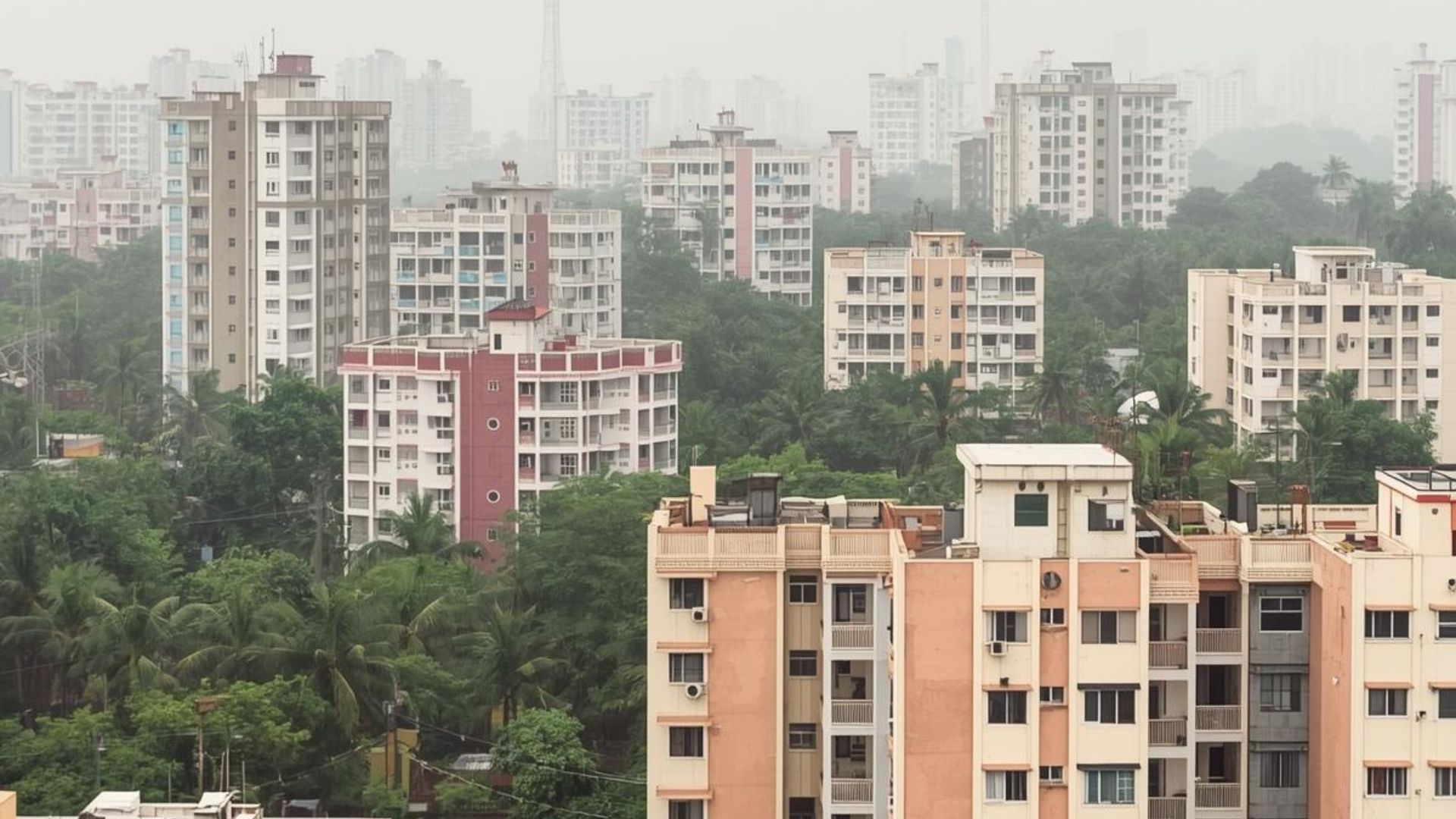
Chennai’s property market have oscillated over the years. There are pockets that are in high demand and then stabilize. Neighbourhoods that everybody overlooked until the metro arrived are now most sought after. March 2026 is no different. The city is doing several things at once, and where you’re looking determines almost everything about what you find.
Here’s a zone-by-zone picture of where prices stand, what’s driving movement, and what the numbers actually suggest for buyers and renters trying to make sense of it right now.
Central Chennai: Still the Most Expensive, Still in Demand
Premium and ultra-luxury residential has always been Central Chennai’s core identity, and nothing in the current data suggests that’s changing. Land is scarce, redevelopment activity is steady, and the addresses that carry social weight in this city; Boat Club, Poes Garden, Adyar, continue to command prices that feel disconnected from the rest of the market.
Boat Club and Poes Garden are benchmarking at ₹32,000 to ₹45,000 per sq. ft. and above, firmly in ultra-luxury territory. These are not markets most buyers participate in. They’re mentioned here mainly because they anchor the top of the city’s price range and affect how everything below them is perceived and priced.
More relevant to a broader range of buyers: Adyar and Besant Nagar are running ₹18,000 to ₹22,000 per sq. ft., classified as premium residential. Mylapore and Alwarpet are slightly wider at ₹18,000 to ₹24,000, while T. Nagar, which carries its own distinct commercial logic given retail density, comes in at ₹19,000 to ₹23,000 in the luxury/commercial mix segment. Anna Nagar Main is positioned at ₹17,000 to ₹21,000, high-end but a step below the Adyar/Mylapore tier.
Kilpauk sits at the lower end of this zone, ₹15,000 to ₹17,500, categorised as established residential. It’s arguably the most accessible entry point into Central Chennai for buyers who want the address and the connectivity without the Poes Garden price tag.
The broader story here is limited supply driving sustained values. There isn’t much new land to build on in these areas, which means redevelopment, older buildings replaced by newer ones, is where the action is. That keeps prices sticky even when the demand softens elsewhere.
OMR and South Chennai: Rental Demand Is High, But Infrastructure Has a Say
The IT corridor has always had its own property logic and March 2026 data reflects a market that is active but price-sensitive in ways that Central Chennai isn’t. Rental demand from tech workers remains the main engine here, but the infographic notes traffic and water infrastructure as factors that influence pricing.
Perungudi and Kottivakkam are at ₹11,000 to ₹15,000 per sq. ft., trending because of proximity to Tidel Park, the kind of address that makes short commutes possible, which in Chennai traffic is not a small thing. Velachery sits at ₹10,000 to ₹13,500, described as a centralised South Chennai hub, which is accurate. It functions as a transit node in ways that keep demand for property there fairly consistent regardless of what the IT hiring cycle is doing.
Sholinganallur is ₹8,500 to ₹11,500 and listed as a Metro Phase II hub – meaning the metro extension is doing for it now what OMR proximity did fifteen years ago. Navalur comes in at ₹6,500 to ₹9,500, flagged as value for IT professionals, which reflects its position further down the corridor where the land is cheaper and the infrastructure slightly thinner.
Siruseri and Kelambakkam – at ₹4,800 to ₹6,500, represent the affordable/gated community end of the OMR story – plotted developments, apartment complexes with amenities, targeting buyers who can’t stretch to Sholinganallur prices but still want the IT corridor address. Medavakkam rounds out the zone at ₹7,000 to ₹9,500 as a residential growth leader, benefiting from its position between OMR and the older southern suburbs.
West and North Chennai: Metro Is Doing the Heavy Lifting
If one theme defines the West and North Chennai story in early 2026, it’s the metro. The data indicates that metro expansion and particularly the Poonamallee extension as creating the highest year-on-year value for the owners. Infrastructure-led appreciation tends to run ahead of actual occupancy and buyers who can read a metro timeline have historically done well in Chennai by positioning early.
Poonamallee itself is at ₹6,000 to ₹8,500 per sq. ft., among the more affordable residential entry points tracked in this overview, and the metro connectivity story is clearly the reason it’s trending. Ambattur is ₹6,500 to ₹8,500, categorised as industrial/mixed-use, which reflects its long history as a manufacturing belt that is gradually getting overlaid with residential demand from workers who’d rather live near their workplace than commute across the city.
Porur and Manapakkam are at ₹8,500 to ₹11,000, driven by IT and manufacturing demand, this stretch sits at a junction between the tech cluster pushing east from the GST Road corridor and the older western industrial areas. Mogappair, at ₹9,500 to ₹12,500, is the premium mid-segment option in this zone: well-established residential, decent social infrastructure, and historically better-regarded than its northern neighbours. Perambur rounds out the North Chennai picture at ₹8,500 to ₹11,000, described as North Chennai’s premium hub, which tells you something about how the gap between North and Central has narrowed over the past decade.
One Note Worth Keeping in Mind
The data includes a caveat that applies across all three zones: ready-to-move units and projects along Metro Phase II corridors command a strong premium over under-construction options. This is consistent with what buyers have learned through experience, possession risk, builder delays, and the general premium on certainty mean that RTM inventory prices higher than the headline numbers suggest. If you’re comparing a ready flat in Sholinganallur to an under-construction project in the same micro-market, the gap in asking price is likely to be real and may be justified depending on your timeline.
What This Adds Up To
Chennai in March 2026 is three fairly distinct property markets operating simultaneously. Central Chennai is a supply-constrained luxury and premium market. OMR and South Chennai is a demand-driven rental and mid-segment market that responds to employment conditions and, increasingly, metro access. West and North Chennai is an infrastructure-led growth story where the metro timeline is the primary price signal.
None of these zones is uniformly good or bad value — it depends entirely on what the buyer or renter is optimising for. Someone who needs proximity to the IT corridor and can’t afford Perungudi rates has a real set of options in Navalur or Siruseri. Someone who wants the Central Chennai address on a Kilpauk budget is making a different set of trade-offs that may or may not make sense depending on their use case.
The numbers are a starting point, not a conclusion. But they’re a more honest starting point than most of what circulates in listing portals, and that’s worth something.

