


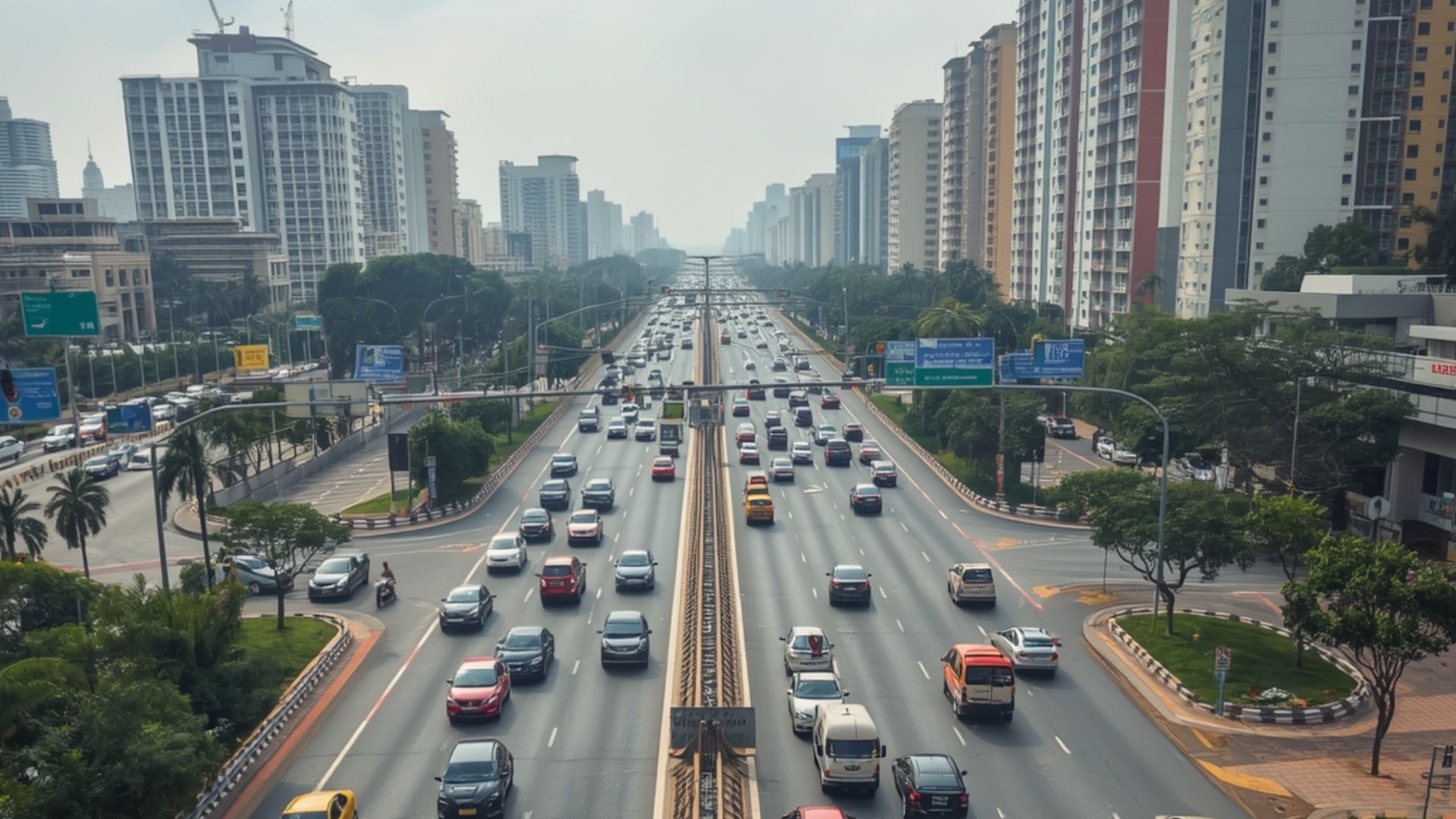
Chennai is in the midst of one of its most ambitious road infrastructure overhauls in years. Large-scale road widening works covering nearly 100 kilometres of arterial roads, junctions, and high-traffic corridors across the city are currently underway, aimed at cutting travel times and easing the chronic congestion that has long paralysed daily movement for millions of residents. The works are part of a broader urban mobility push tied to the city’s rapidly rising vehicle density and population, which official figures show has grown from 11.2 million in 2021 to an estimated 14.5 million in 2025.
Authorities have identified several key intersections and landmark areas for intervention under the plan. Officials say the works are designed to improve flow at existing bottlenecks — points where the road width simply cannot accommodate the volume of vehicles that pass through them during peak hours. Once completed, the expectation is a meaningful improvement in travel time along the city’s most congested corridors. For commuters who spend upwards of three hours a day on Chennai’s roads — a reality documented in recent World Bank-linked urban mobility assessments — even modest improvements in arterial capacity can translate into real gains in daily quality of life.
Yet road widening alone is not a silver bullet, and urban planners are increasingly cautious about treating it as one. Induced demand — the well-documented phenomenon where new road capacity quickly fills with additional traffic — means that widening projects in isolation rarely deliver long-term relief. Chennai’s own Comprehensive Mobility Plan (CMP) acknowledges this challenge, proposing that road infrastructure investments be paired with significant expansions in public transport: the plan envisions increasing the city bus fleet from 3,481 to 8,533 by 2048, lifting daily bus ridership from 3.9 million to 6.5 million.
In the near term, residents living and commuting near active road widening sites should expect significant disruption. Stormwater drain infrastructure often requires concurrent works when roads are widened, and areas like Ramapuram have already seen residents facing severe inconvenience from slow-progressing SWD works running alongside road projects. The Gengu Reddy subway near Nehru Park and the Nungambakkam subway are among several locations where infrastructure renovation has been proceeding in the background, adding to traffic congestion at nearby junctions even before the formal widening works begin.
The timing of the push also intersects with Chennai Metro Phase 2 — the 118.9 km expansion that will add 128 stations across three new corridors (Madhavaram–SIPCOT, Lighthouse–Poonamallee Bypass, Madhavaram–Sholinganallur). Property developers and urban planners have noted that both the metro expansion and road widening work are already reshaping where buyers choose to invest and live, with areas along the new corridors — Poonamallee, Porur, Sholinganallur, Madhavaram — experiencing steady price appreciation anchored by future connectivity. The practical advice for daily commuters in Chennai right now: check your usual routes before heading out, expect temporary diversions and lane closures near active works, and where possible use the CUMTA-coordinated public transport options. The road widening projects, when complete, are expected to significantly enhance traffic flow across key city corridors. But the construction phase itself, superimposed on a city already straining under its own transport pressure, is going to test the patience of millions of Chennaiites before the benefits arrive.

