


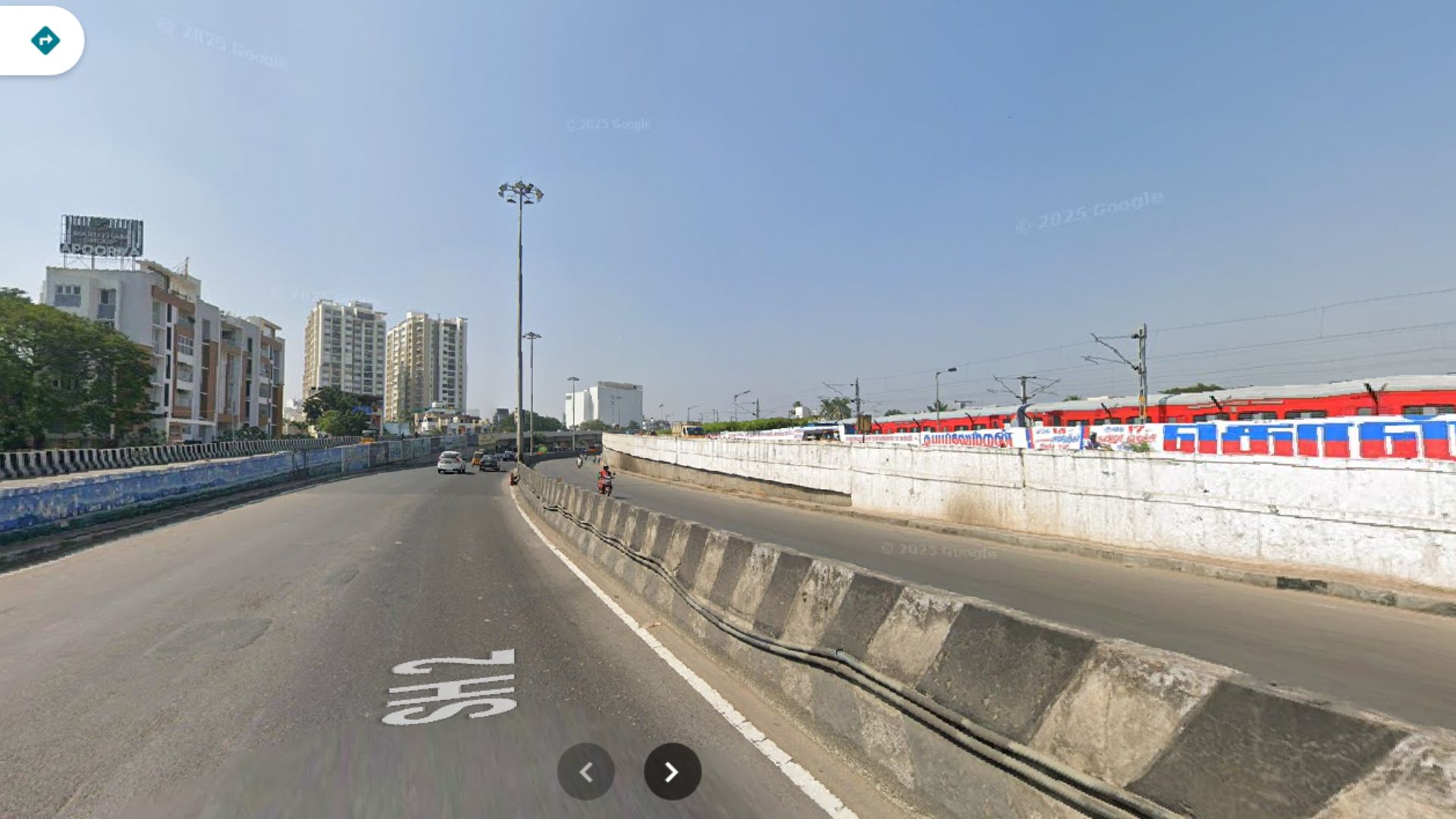
The TN State Highways Department has started the widening the Padi rail overbridge (ROB) on Jawaharlal Nehru Salai (Inner Ring Road) a long-pending intervention on one of Chennai’s most persistent choke points. The project, estimated at ₹139 crore, will convert the existing three-lane bridge into a dual five-lane structure and widen the narrow approaches leading into Padi.
Engineers have planned a significant expansion in width: the ROB will grow from 27 metres to 53 metres, with footpaths on both sides. The department will widen the approach roads and adjoining stretches to five lanes and add a central median to smoothen traffic movement through the bottleneck.
The work splits between agencies. Highways officials will handle the sections within their land limits, while Southern Railway will execute the portion that crosses the railway tracks. Southern Railway has begun sourcing girders from its yard at Arakkonam, and the project also requires electrical line shifting along parts of the alignment.
The urgency is easy to understand if you have driven the Inner Ring Road at peak hours. The Padi ROB currently sits between Villivakkam and Korattur railway stations on a corridor between Manali and Guindy. But near Padi, the road constricts sharply, narrowing to two lanes close to the railway station. The pinch forces traffic to bunch up, contributing to delays and a higher risk of crashes.
Alongside the bridge widening, Highways is also building two U-shaped service roads beneath the Villivakkam ROB at a cost of ₹14 crore. Each service road is planned at 7.5 metres width and is intended to let vehicles take U-turns towards North Korattur and Padi without entering the busy junction at the North Korattur signal. Officials expect this to reduce congestion at the intersection and help lighter vehicles bypass the worst of the conflict points.
Highways officials have indicated an April 2026 completion target. For commuters, the next few weeks will likely bring the familiar discomfort that comes with roadwork on a live arterial corridor. The payoff will depend on the various parameters of execution: how quickly the approaches widen, how cleanly traffic gets channelled during construction and whether the new widths and service roads prevent the bottleneck from shifting a few hundred metres down the road.

