An old Chennai apartment block can now be pulled down and rebuilt if two-thirds of its owners agree, or if the planning authority certifies the building is ruinous or dangerous, under Section 13 of the Tamil Nadu Apartment Ownership Act, 2022, according to the Act’s text. Before this law, a single holdout owner could block a redevelopment deal for years.
That matters across the city. Flats built in the 1980s and 1990s in places like Anna Nagar, Besant Nagar, Adyar and KK Nagar now sit on land worth far more than the tired buildings on it, and builders approach associations with offers of bigger new flats in exchange for development rights. Here is how the legal process works and what owners should check before signing anything.
The two routes to redevelopment
The Act allows redevelopment on either of two grounds:
- Owner consent: not less than two-thirds of the apartment owners of the project agree.
- Safety: the appropriate authority certifies that the building is in ruinous condition or may endanger lives.
The terms and conditions are set by the rules issued in September 2024. Law firm JSA’s summary of those rules describes the steps. The association can call a special general meeting on its own or when a quarter of owners ask for one, and must secure two-thirds consent there. In the safety route, the association passes a redevelopment resolution at a special general meeting after the certificate is issued. The “appropriate authorities” here are the town and country planning authorities, such as CMDA within the Chennai Metropolitan Area.
From report to registered scheme
As JSA sets out the process under the rules, it moves through two key documents.
- Detailed Redevelopment Report. A promoter or consultant engaged by the association prepares it. It covers the carpet area each owner will get, alternative accommodation during construction and the security deposit. The association approves it, then negotiates commercial terms with the builder.
- Written consent. At least two-thirds of owners give written consent to the final terms.
- Detailed Redevelopment Scheme. This is the agreement between the association and the promoter, setting timelines, revisions to each owner’s undivided share of land, and how new units are allotted.
- Authentication. The planning authority verifies and authenticates the scheme.
- Registration. The scheme must be registered with the jurisdictional sub-registrar within 90 days of authentication.
- Vacating. Within 30 days of authentication, the association serves notice on owners to hand over vacant possession.
- Approvals and building. The promoter gets planning permission and building approvals, allocates units, and hands over new flats with a handover certificate on completion.
After redevelopment, the building’s declaration under the Act must be amended to reflect the new structure. District Registrars act as competent authorities under the Act, according to a September 2024 gazette notification.
What owners should look at before agreeing
The legal process sets the minimum. The deal itself is where owners win or lose. Points to examine:
- Carpet area, not super built-up area. Compare your current carpet area with what you will get, in writing.
- Rent and deposit. Monthly rent for alternative accommodation and the security deposit should be specified, with escalation if the project runs late.
- Completion deadline and penalties. A firm date and a per-month penalty for delay protect you more than a promise.
- Undivided share. Redevelopment usually adds flats, so each owner’s share of land shrinks. Check the revised figure.
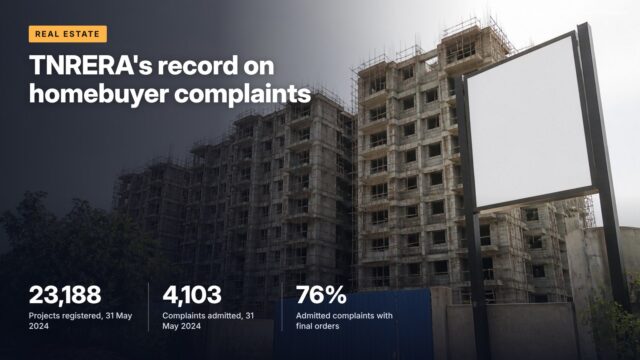
- Builder’s record. Look up the promoter’s past projects on the TNRERA website. A redevelopment that adds flats for sale above the RERA thresholds of 500 sq m of land or eight apartments needs project registration before any sale.
- Your loan. If your flat is mortgaged, your bank must be told and will need to agree.
Associations usually get better terms by inviting proposals from several builders and hiring their own lawyer and structural engineer, rather than relying on the builder’s consultant.
If you disagree
The Act’s two-thirds threshold means a minority cannot block a properly approved scheme. The Act itself does not set out a separate procedure for dissenting owners, and the detail lies in the rules and your bye-laws. If you believe the meeting was improperly called, consent figures were inflated or the board acted against the bye-laws, you can complain to the District Registrar, who can issue directions to the board. For disputes over the terms themselves, take legal advice early, before the scheme is authenticated.
Quick answers
How many owners must agree to redevelop?
Not less than two-thirds of the apartment owners, unless the building is certified ruinous.
Who authenticates the redevelopment scheme?
The planning authority, such as CMDA in the Chennai Metropolitan Area.
How soon must the scheme be registered?
Within 90 days of authentication, with the jurisdictional sub-registrar.
Does my building’s age decide eligibility?
The Act sets no minimum age; it relies on owner consent or a safety certificate.
This is general information, not legal advice; consult a property lawyer before signing a development agreement.
Information checked against official sources on 18 October 2026. Fees, dates and rules can change; confirm on the linked official pages before acting.
Sources
- The Tamil Nadu Apartment Ownership Act, 2022 (India Code)
- JSA Prism Real Estate, October 2024: Tamil Nadu apartment ownership (JSA Advocates and Solicitors)
- Tamil Nadu Government Gazette Extraordinary No. 304, 24 September 2024 (Stationery and Printing Department)
- Tamil Nadu Real Estate Regulatory Authority