With a resale flat in Chennai, the papers you most need are the ones the seller is least likely to have to hand: the full chain of title deeds back at least 30 years, the original building plan approval, and a written statement from the apartment association of any unpaid maintenance. Under the Tamil Nadu Apartment Ownership Act, 2022, you can be held liable for the seller’s unpaid dues unless you get that statement before you buy, according to the Act’s Section 22.
A new flat from a builder comes with a RERA registration and one developer to chase. A ten-year-old flat in Velachery or Porur comes with a decade of owners, loans, renovations and association decisions. Here is the checklist, in the order a careful buyer works through it.
1. Title: who owns it and how they got it
- Sale deed of the current owner, registered, with the schedule of property describing the flat and the undivided share of land.
- Parent documents: every earlier sale deed, settlement, gift or partition deed, ideally covering 30 years. For a flat, this includes the land owner’s deed, the joint development agreement or power of attorney given to the builder, and the builder’s sale deed to the first buyer.
- Inheritance papers: if any owner in the chain died, a legal heir certificate and, where needed, a probated will or partition deed signed by all heirs.
- Power of attorney sales: if any link in the chain was signed by an agent, check that the power of attorney was registered and valid on that date.
Get certified copies of key deeds from the sub-registrar through TNREGINET, which offers online applications for certified copies and encumbrance certificates, and compare them line by line with the seller’s originals.
2. Encumbrances and loans
Pull an encumbrance certificate for the full 30 years. Every sale and registered mortgage should match the deed chain. If the seller has a home loan, the flat’s original documents are with the bank. You will need the bank’s letter stating the outstanding amount, and the loan must be closed and the documents released at registration. Our separate EC guide explains how to read the certificate.
3. Land records
Check the patta for the land survey number on the Revenue Department’s e-services site. For apartments, patta is often still in the name of the land owner or builder, or held jointly. That is common, but confirm the survey number in the patta matches the one in the sale deed, and that the land is not classified as government or water body land. Ask whether the seller’s name has been added to the patta, and if not, plan to apply for transfer after purchase.
4. Approvals for the building
- Planning permission and approved plan from CMDA or the local body, with the permit number. Ask to see the full sanctioned plan, not only the floor sheet for your flat.
- Completion certificate issued after construction, which confirms the building was put up as approved. Without it, lenders may refuse a loan and some service connections are harder to get.
- Deviations: walk the building with the plan in hand. An extra floor, a closed balcony or stilt parking turned into shops can be a violation that affects every owner.
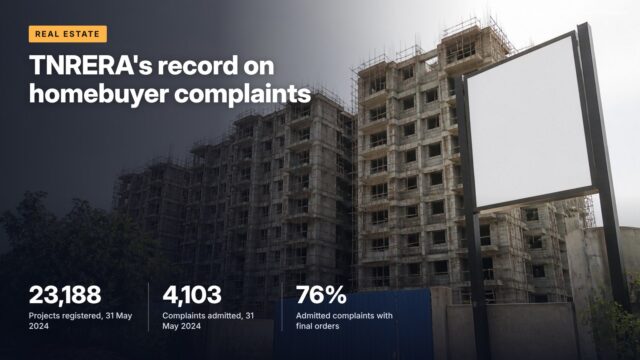
- RERA: if the building was completed recently, check whether it was a registered project on the TNRERA site; registration applies to projects above 500 sq m of land or more than eight apartments.
For older approvals, a request to CMDA or the corporation’s building planning office is the way to confirm a permit is genuine.
5. Association and running costs
- Statement of dues from the association, which under the Act caps what you can be charged for the seller’s past arrears.
- No-objection letter or share transfer as required by the association’s bye-laws, and a copy of the bye-laws themselves.
- Recent minutes and accounts: look for planned special levies, such as lift replacement, waterproofing or redevelopment talks.
- Property tax, water and electricity: latest paid receipts for corporation property tax, Metro Water charges and the electricity bill, with the service connection numbers.
6. At registration
Stamp duty and registration charges are paid on the higher of the agreed price and the guideline value. Have the sale deed drafted to describe the flat, car parking, undivided share and common rights exactly as in the parent deed. After registration, apply for transfer of property tax, electricity service and patta into your name, and give the association a copy of your deed.
Quick answers
How many years of title should I check for a resale flat?
Lawyers usually trace at least 30 years, through to the land owner before the builder.
Do I pay the seller’s unpaid maintenance?
Under the 2022 Act, only up to the amount in the association’s statement of dues, so get one before buying.
Is patta in the builder’s name a problem?
Often not, but the survey number must match the sale deed. Apply for transfer after you buy.
Why does the completion certificate matter?
It shows the building matches its approval, and lenders commonly ask for it.
This is general information, not legal advice; a property lawyer should examine the documents before you pay an advance.
Information checked against official sources on 18 October 2026. Fees, dates and rules can change; confirm on the linked official pages before acting.
Sources
- TNREGINET public services: EC, certified copies, guideline value (Registration Department, Tamil Nadu)
- e-Services: Patta, Chitta and A-Register (Revenue Department, Tamil Nadu)
- The Tamil Nadu Apartment Ownership Act, 2022 (India Code)
- Chennai Metropolitan Development Authority
- Tamil Nadu Real Estate Regulatory Authority